Shovel vs Snow Plow: Which Snow Removal Method Is Right for Your Property?
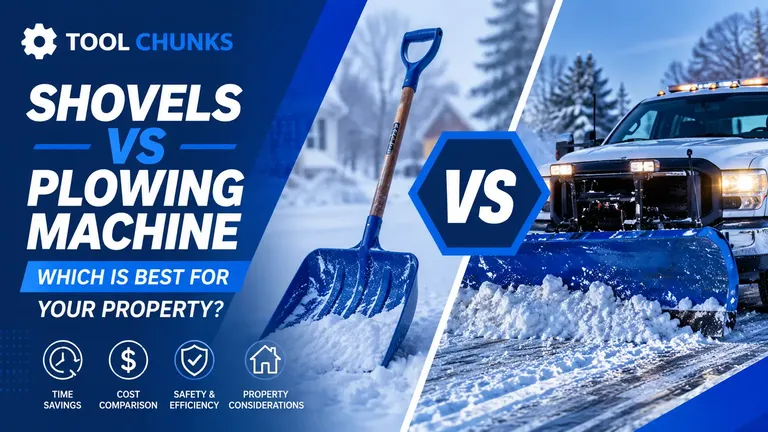

For most property owners, the choice between a shovel and a snow plow comes down to a simple question: How much time, effort, and money are you willing to invest in snow removal each winter?
A shovel remains the most practical solution for small areas and occasional snowfall. A snow plow becomes increasingly valuable as property size grows, storms become more frequent, and clearing snow starts consuming significant time.
After working in weather services, earning a degree focused on snow science, and operating snow-removal businesses in Montana, I've found that many people focus on the wrong factor when making this decision. They look at snowfall totals when they should be looking at workload.
A property receiving six inches of snow isn't necessarily difficult to maintain. A long driveway receiving six inches of snow fifteen times each winter is a different story.
Quick Verdict
Choose a shovel if:
-
You have a short driveway or sidewalk.
-
Snowfall is relatively infrequent.
-
You want the lowest upfront cost.
-
Physical labor is not a concern.
Choose a snow plow if:
-
You maintain a long driveway.
-
Multiple parking areas need clearing.
-
Heavy snowfall occurs regularly.
-
Time savings matter more than equipment costs.
-
Physical limitations make shoveling difficult.
For many property owners, the best answer is neither. A snow blower often fills the gap between manual labor and a full plow setup.
The Most Important Factor: Area to Be Cleared
One of the most common mistakes homeowners make is evaluating snow-removal equipment based solely on annual snowfall.
Professionals usually look at square footage first.
Consider two properties:
-
Property A receives 80 inches of snow annually and has a 40-foot driveway.
-
Property B receives 50 inches annually and has a 300-foot driveway.
Property B often requires more total labor despite receiving less snow.
During my years operating snow-removal routes in Montana, I noticed that customers rarely upgraded equipment because of a single large storm. Most upgrades happened after several winters of repeated clearing sessions that consumed hours each week.
As a general guideline:
| Clearing Area | Recommended Option |
|---|---|
| Under 1,000 sq. ft. | Shovel |
| 1,000–3,000 sq. ft. | Snow blower |
| Over 3,000 sq. ft. | Snow plow often justified |
These aren't strict rules, but they provide a practical starting point.
Speed and Productivity
Speed is where plows create their biggest advantage.
A shovel removes snow one section at a time. Productivity depends entirely on the person using it.
A plow can move large volumes of snow in a single pass.
Typical clearing times look something like this:
| Area | Shovel | Plow |
|---|---|---|
| Small driveway | 20–30 minutes | 2–5 minutes |
| Medium driveway | 45–60 minutes | 5–10 minutes |
| Long rural driveway | 1–2 hours | 10–20 minutes |
The difference becomes more dramatic as winter progresses.
Many first-time property owners focus on clearing fresh snow but overlook snow accumulation. By February, snowbanks can reduce parking space, narrow driveways, block sightlines, and create challenges that didn't exist earlier in the season.
A plow handles ongoing snow management far more efficiently than manual shoveling.
Physical Effort and Safety
Shoveling snow is one of the most physically demanding outdoor chores homeowners perform.
The risk isn't limited to sore muscles.
Common snow-removal injuries include:
-
Back strains
-
Shoulder injuries
-
Knee injuries
-
Slip-and-fall accidents
-
Cardiovascular stress during heavy exertion
Wet snow is often the culprit.
A few inches of dry powder can be easy to move. The same depth of wet snow can weigh several times more and quickly turn a routine task into an exhausting workout.
One pattern I've seen repeatedly is that homeowners are comfortable shoveling until they experience their first major wet snowfall. That's often the moment they begin looking at snow blowers or plow systems.
Plows reduce physical strain significantly, although operators must still manage equipment safety, visibility issues, and the potential for property damage.
Cost Comparison: Looking Beyond Purchase Price
At first glance, a shovel appears dramatically cheaper.
And in terms of upfront cost, it is.
Snow Shovel
-
Purchase cost: $30–$100
-
Maintenance: Minimal
-
Storage requirements: Very low
ATV or UTV Plow
-
Typical cost: $1,500–$5,000+
-
Fuel expenses
-
Seasonal maintenance
-
Replacement wear parts
Truck-Mounted Snow Plow
-
Typical cost: $6,000–$12,000+
-
Vehicle wear and depreciation
-
Fuel costs
-
Hydraulic maintenance
-
Repairs
The mistake many property owners make is focusing entirely on equipment costs while ignoring labor.
If snow removal takes an hour after every storm and your area averages twenty snow events per season, that's roughly twenty hours of work annually. For some people, that's acceptable. For others, that time has greater value elsewhere.
Snow Storage: The Problem Nobody Thinks About
Removing snow is only half the challenge.
The other half is deciding where to put it.
Snow storage becomes increasingly important throughout winter, especially in regions that experience frequent storms.
Large snowbanks can:
-
Reduce parking capacity
-
Block visibility at driveways
-
Restrict emergency access
-
Create drainage issues during thaw periods
I've seen properties where snow removal was relatively easy in December but became significantly more difficult by February because there was simply nowhere left to push additional snow.
Plows generally manage snow storage better because they can move snow farther from traffic areas before piles become problematic.
Performance in Different Snow Conditions
Light, Dry Snow
A shovel performs well and often remains the simplest solution.
Heavy, Wet Snow
A clear advantage goes to the plow.
Dense snow dramatically increases physical effort and slows manual clearing.
Deep Snowfalls
Once snowfall exceeds 8–10 inches, shoveling becomes noticeably less efficient.
Many homeowners end up clearing multiple times during a storm simply to avoid dealing with excessive accumulation.
Ice and Packed Snow
Neither option completely solves the problem.
Ice typically requires:
-
Salt or de-icing products
-
Mechanical scraping
-
Preventive treatment before storms
Even commercial plows struggle with ice bonded directly to pavement.
What About Snow Blowers?
Snow blowers deserve consideration because they often provide the best balance between cost and productivity.
Compared with shovels, they reduce physical effort and significantly increase clearing speed.
Compared with plows, they require a much smaller investment and less storage space.
For many suburban homeowners, a quality two-stage snow blower is often the most economical long-term solution.
In fact, many people comparing shovels and plows ultimately discover that a snow blower is the equipment they actually need.
Commercial and Liability Considerations
For commercial properties, snow removal isn't just a convenience issue.
It can affect:
-
Customer access
-
Employee safety
-
Emergency vehicle access
-
Slip-and-fall liability
-
Parking availability
A delay of several hours after a major snowfall may be inconvenient for a homeowner. For a business, it can create operational and legal concerns.
This is one reason commercial property owners frequently justify plow investments or professional snow-removal contracts more quickly than residential owners.
Final Recommendation
There is no universal winner between a shovel and a snow plow.
For small properties, short driveways, and occasional snowfall, a shovel remains inexpensive, reliable, and effective.
For larger properties, long driveways, frequent storms, or situations where time and physical effort matter, a plow offers advantages that often outweigh its higher cost.
The most important lesson is that snowfall totals alone should not drive the decision. Driveway length, clearing area, storm frequency, snow storage capacity, and the value of your time are usually far more important factors.
The property owners who are happiest with their snow-removal setup are rarely the ones who bought the biggest equipment. They're the ones who chose equipment that matched the workload their property actually creates.