How to Start a Snow Removal Business: A Complete Step-by-Step Guide
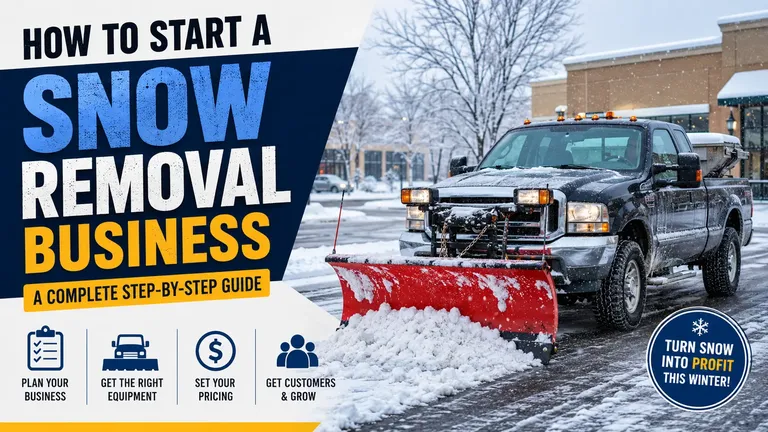

Starting a snow removal business is one of those ideas that looks simple from the outside, but it actually runs on timing, preparation, and local demand awareness. If you’re researching how to start a snow removal business, the reality is straightforward: you’re building a seasonal service operation where most of your income is earned in short, high-pressure weather windows.
A snow removal business involves clearing snow and ice from residential driveways, sidewalks, commercial parking lots, and walkways during winter storms. The demand spikes quickly when snowfall hits, and property owners usually need immediate service—often within hours, not days.
That urgency is what makes this business attractive. Entry costs can be relatively low, cash flow is fast during storms, and repeat seasonal contracts create stability. But there’s a trade-off: if you’re unprepared before winter starts, you’ll miss the most profitable opportunities entirely.
This guide walks you through the process in a realistic, field-based way—not just theory—so you understand what actually matters when the first snow hits.
Is a Snow Removal Business Profitable?
Yes, but profitability depends more on execution than demand.
In most North American snowbelt regions, residential snow clearing typically earns $30–$100 per driveway per visit, depending on size, snow depth, and urgency. Commercial contracts are where income becomes more stable. Small lots often range from $200–$800 per clearing, while larger retail or industrial sites can reach several thousand dollars per storm.
The important thing most beginners don’t realize is this: snow removal income is not evenly spread. In many regions, 70–80% of seasonal revenue can come from just a handful of major storms.
That creates both opportunity and risk.
From experience in the landscaping industry, operators who succeed long-term usually do three things right:
-
Lock in seasonal contracts before the first snowfall
-
Build efficient multi-property routes
-
Avoid overextending equipment capacity during peak storms
Location also matters more than people expect. A contractor in Michigan or Ontario may have 20–40 plowable events per season, while someone just a few hundred miles away may get half that.
Step 1 – Research Your Local Snow Removal Market
Before buying any equipment, you need to understand your local winter behavior. This step is often skipped, and it leads to poor pricing decisions later.
Ask practical questions:
-
How many measurable snow events happen annually?
-
Do residents already rely on contractors or do they self-shovel?
-
Are commercial properties already locked into long-term contracts?
Residential markets are usually easier to enter but more competitive. Commercial properties are harder to win but far more stable once secured.
A real-world example: in suburban neighborhoods with older homeowners, demand for driveway clearing spikes quickly after just 2–3 inches of snow. In contrast, younger areas often have more DIY behavior, which lowers immediate demand.
Competitor mapping is also essential. If every major intersection already has a plow truck servicing it, you’ll struggle unless you offer faster response times or bundled seasonal pricing.
Step 2 – Choose Your Snow Removal Business Model
Your business model determines everything else—equipment, staffing, and even stress levels during storms.
Common models include:
-
Residential driveway clearing: Fast turnaround, high volume, lower ticket size
-
Commercial contracts: Parking lots, shopping centers, office complexes—more predictable revenue
-
HOA and sidewalk contracts: Stable, recurring, often overlooked by beginners
-
On-demand emergency service: Higher rates but unpredictable workload
Most successful operators eventually shift toward a hybrid model: commercial contracts for baseline income and residential jobs for overflow during peak storms.
One-time jobs are good for cash flow early on, but seasonal contracts are what stabilize the business.
Step 3 – Register Your Business and Handle Legal Requirements
Even if you start small, setting up a proper business structure protects you later.
Most operators choose between:
-
Sole proprietorship (simple but higher personal liability)
-
LLC (preferred for scaling and commercial contracts)
Registration requirements vary by region, but typically include:
-
Business name registration
-
Local operating permits (if required)
-
Tax registration for service income
Snow removal also has liability exposure. If someone slips after you service a property, you could be held responsible depending on contract terms and local laws. That’s why documentation and clear service agreements matter more than people expect.
Step 4 – Get the Right Equipment for Snow Removal
Equipment is your income engine.
A basic setup might include:
-
Snow shovels for tight residential spaces
-
Snow blower for mid-size properties
-
Pickup truck with plow (core revenue tool)
-
Salt spreaders and de-icing materials
Here’s the reality most beginners learn late: your equipment determines how many jobs you can actually handle per storm.
A single plow truck might service 10–25 residential driveways per hour depending on proximity and snow depth, but that efficiency drops quickly if routes are poorly planned.
Renting equipment is fine for testing the business, but long-term operators usually buy because storms don’t wait for rental availability.
Step 5 – Understand Startup Costs for a Snow Removal Business
Startup costs vary depending on scale:
-
Basic handheld setup: $1,000–$5,000
-
Small residential truck setup: $10,000–$25,000
-
Commercial-capable setup: $25,000–$60,000+
Hidden costs matter:
-
Fuel spikes during storms
-
Emergency repairs in freezing conditions
-
Salt price fluctuations in peak season
-
Insurance renewals tied to vehicle usage
A common mistake is underestimating cash flow timing. You spend heavily before winter, then earn in bursts when storms hit. That cycle requires discipline.
Step 6 – Set Your Pricing Strategy
Pricing is where many snow removal businesses either stabilize or collapse early.
Common models:
-
Per-visit pricing: Best for residential consistency
-
Hourly pricing: Flexible but harder for customers to trust
-
Seasonal contracts: Most stable and preferred by professionals
-
Commercial pricing: Based on square footage and response SLA (service speed agreements)
Seasonal contracts are often underrated. Even in light snow years, they provide predictable income.
A practical approach is blending pricing systems. For example, you might offer:
-
Seasonal residential packages for core clients
-
Per-push pricing for additional storms
-
Premium pricing for urgent “during storm” calls
In real operations, speed often matters more than price. A reliable contractor who shows up early in a storm can charge more without losing clients.
Step 7 – Get Insurance for Your Snow Removal Business
Insurance is not optional in this industry—it’s survival.
You typically need:
-
General liability insurance (slip-and-fall protection)
-
Commercial auto insurance (for plow trucks)
-
Equipment coverage (for damage or breakdowns)
Snow-related claims are common because conditions are inherently risky. One missed patch of ice can create a legal issue.
Commercial clients especially require proof of insurance before signing contracts.
Step 8 – Build a Customer Base and Market Your Services
Most snow removal businesses grow locally, not through ads alone.
Effective strategies include:
-
Door-to-door flyers before winter season
-
Google Business Profile setup for local search visibility
-
Posting service availability in neighborhood groups
-
Partnerships with property managers and HOAs
-
Early-bird seasonal discounts
The most reliable strategy, in practice, is pre-season contracting. Once snow starts falling, customer acquisition becomes reactive and competitive.
Step 9 – Plan Your Snow Removal Operations
Operations decide whether you make money or lose sleep during storms.
Key elements:
-
Route planning to reduce travel time
-
Storm forecasting monitoring
-
24/7 availability planning during snow events
-
Backup equipment readiness
-
Clear escalation plan for heavy snowfall days
A realistic point most beginners miss: snow removal often starts at 2–4 AM during active storms to ensure properties are cleared before morning traffic.
If you’re disorganized, fatigue becomes a serious issue fast.
Step 10 – Scale Your Snow Removal Business
Scaling happens when you move from “worker” to “operator.”
Common growth paths:
-
Adding second plow truck
-
Hiring seasonal subcontractors
-
Expanding into neighboring territories
-
Bundling with landscaping or lawn care for year-round income
-
Targeting larger commercial contracts with SLA guarantees
The most stable businesses I’ve seen in landscaping don’t rely on snow alone—they use snow to stabilize winter revenue, then rely on landscaping for year-round cash flow.
Common Mistakes to Avoid When Starting a Snow Removal Business
-
Underpricing just to win early clients
-
Skipping insurance coverage
-
Poor route planning during storms
-
Waiting too long to secure contracts
-
Ignoring equipment maintenance until breakdowns happen
The biggest failure point is usually timing, not effort.
FAQs About Starting a Snow Removal Business
How much does it cost to start a snow removal business?
Anywhere from $1,000 for basic tools to $30,000+ for a truck-based setup.
Do I need a license?
It depends on your location, but most regions require at least basic business registration.
How much can a beginner make?
Seasonal earnings can range from a few thousand dollars to $50,000+ depending on contracts and snowfall.
What equipment is absolutely necessary?
At minimum: shovel, snow blower, and a reliable vehicle. A plow truck is essential for scaling.
Is snow removal a good side business?
Yes, especially if you already have flexible winter availability.
Conclusion
Starting a snow removal business is less about buying equipment and more about preparation, timing, and understanding your local market. The people who do well are usually the ones who set up contracts before winter, plan routes carefully, and treat snow days like structured operations—not random emergencies.
If you’re seriously thinking about how to start a snow removal business, the best time to prepare is always before the first snowfall, not after.